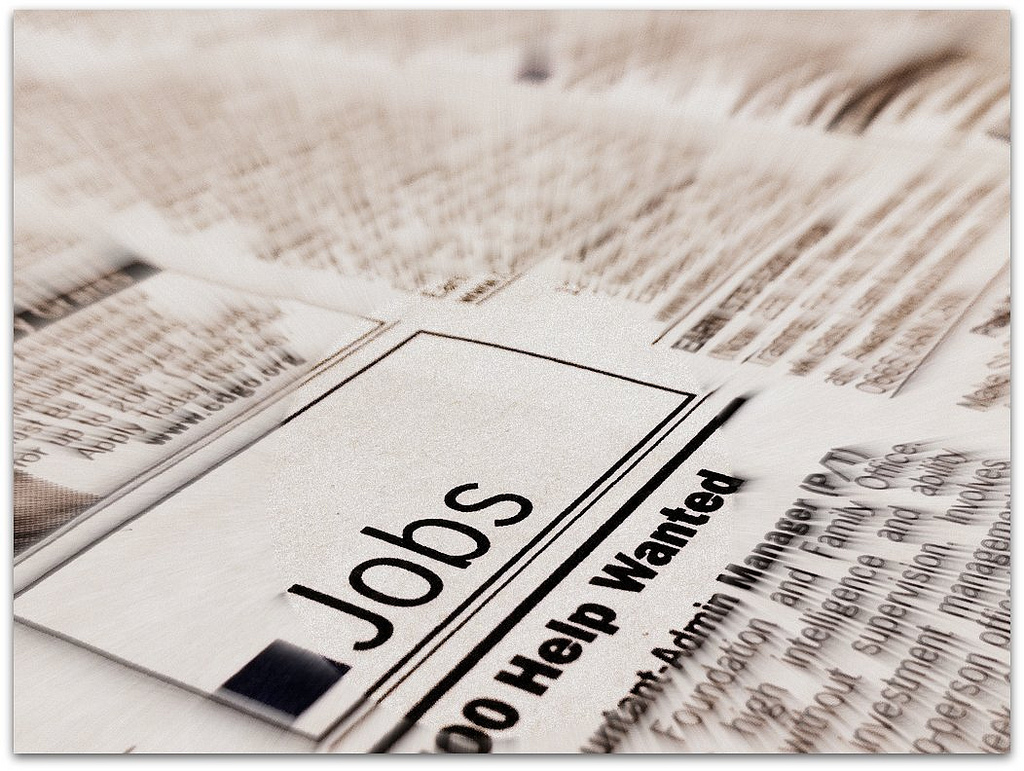
AOL, 2006 Called and Wants Its Content Commoditization Strategy Back…

Photo by jdlasica on Flickr
It was a Monday like any other Monday. After a weekend of too much drinking, low-key football-centric Sunday celebrations (Go Packers!) and an early night to bed, I woke up this morning in the way I normally do on a Monday: Cursing ye gods of Mondays past, and hoping the day would not turn into the inevitable case of the Mondays that they all do.

Wearily, I reached for my laptop to find out what the Monday morning tech news buzz was and my eyes flew open in surprise: AOL had acquired the Huffington Post for $315M in a hybrid cash and stock transaction. This only a few months after TechCrunch had been acquired, also by AOL, for an undisclosed amount.

It was a deja vu kind of moment this morning as I saw the stereotypical business model of the mid-2000s flash before my eyes. In those days, everyone thought they could make money purely on advertising and content. Crank out the content, get more eyeballs, get more ad dollars, PROFIT!

The problem was (and still is!) is that the more content that is produced, the less valuable it becomes. It’s really very simple economics. More importantly, the advertising world has two buckets… maybe three if you put Adsense by itself in the lowest bracket. You have direct-buy, expensive, high-return type ads. These are most often purchased by big companies with big advertising budgets like Apple, Cisco, etc.

The second type of advertising (putting aside alphabet soup forms like CPA, CPM, CPC, etc) is generically called “remnant advertising”. Remnant ads make up the vast majority of internet advertising. It’s cheap to buy in bulk (and in a less targeted way), doesn’t usually pay a lot and, in general, is a good way to do commodity advertising.

This is what we did at b5media. I’ve not spoken much about my time at b5media because, frankly, it disgusts me where they’ve come. We actually had a good product going and things went awry. I won’t place blame. But what I will say is… we built that company on commodity advertising, commodity content, and had a tough time growing the company. I left with over 350 blogs in a dozen “channels”, each channel being a grouping of 20-30 blogs around a topic like sports or entertainment.

It was easier to try to do ad sales for a group of blogs on a topic, than it was to do targeted, lucrative advertising.

The problem with the b5media model, along with the Weblogs Inc model that sold (ironically also to AOL), the Gawker model, the Glam model, and now the AOL model, is that the content quality sucks. When I pick up a magazine or newspaper, I would not liken most media to The Atlantic or The New Yorker, both of which are highly intelligent publications that put out content that is exceptionally tuned and academic. The quality of the content is orders of magnitude higher than most newspapers or magazines (obviously including this blog).

Those publications are rare and can get private money from subscriptions, etc. The advertising route is the cheap route, and the route that business models go when they aren’t good enough to charge for access (a more reliable revenue source).

For the record, commodity business don’t normally pay their writers anything comparable to what their “colleagues” at uncommoditized media organizations get paid. That’s because, their work is not valuable unless it is in bulk.

Going back to the $25M Weblogs Inc acquisition in 2005, AOL has gone down this road of commodity content before. They even killed off a bunch of the WIN properties keeping only the ones that were truly valuable – like Engadget. They are taking a different approach and buying individual high-productivity sites now – which is better – but then their strategy is one that involves combining these sites, at least on a content integration level, into a mass-produced, commoditized content machine.

So is it really different?

To Whom Much is Given, Much is Required (or, Scoble Syndrome)

Photo by Eric Skiff
Here we go again. Another day in the life of an ongoing saga between megalomaniac Robert Scoble and myself. In this chapter of this saga, I point out why I have figured out the key thing that he has repeatedly not learned… to whom much is given, much is required.

It started out this morning with Scoble (again) being on the losing side of a battle surrounding something on the web that he thought was so cool, he drove into the ground. This has happened a lot in the last 4-5 years I’ve known Robert.

It happened with Twitter when he jumped on early, amassed a huge number of followers because, let’s be honest, Twitter wasn’t very big in 2006 or 2007 as it is now, and it was easier to grab the spotlight then. Trust me. I know. I was there. He vocally “left” Twitter for Friendfeed when he wasn’t getting enough attention.

It happened later with FriendFeed where I made an early decision after months of use that the cliquishness and snippiness among the elite power users, Robert included, was something I just didn’t want to deal with. I deleted my account and Robert flipped. Ironically, Mike Arrington made a similar decision for different reasons and Robert flipped. It was ugly. Mike wrote a post likening FriendFeed to syphilis and Robert blew a gasket.

We often wondered, in those days, if Robert was a silent investor at FriendFeed because he was doing everything he could do prop the fading service up. He eventually relented and kinda maybe sorta possibly if you had one eye closed and a hand tied behind your back apologized to Mike and I.

Whatever. It’s not about the apology. It’s about narcissistic publicity grabbing tantrums and bloviating. That’s really the core.

It was thankfully peaceful for many months. Robert did his thing. I did mine. One would presume Arrington did his. There was little drama over such silly things, much less any instigations. It was, as they say, the Korean DMZ… still at war… but mainly peaceful.

Until this morning when Robert found himself on the losing end of a drama surrounding Quora. Quora is a new Questions and Answers service that allows users to ask questions and receive answers. Answers are rated up or down and the idea is a crowdsourced agreed-upon answer. The more people say, “Yes, that’s correct”, the more authoritative that answer becomes. It’s a living FAQ of the world. Pretty cool.

Until people start doing things their own way, redefining the service in the face of users and not at all in the right ways.

And while wisdom is the better part of valor, and listening more than speaking often diffuses the problem, Robert decided to “explain” his side of the story… because, you know, he can’t just accept his beatings and get on with life.

But in his explanation, he doesn’t actually take any responsibility and, in fact, pushes the blame on to everyone except himself. Watch as I share, in his words, what happened:

At first I tweeted just my answers to questions. This ensured that my answers would be seen by a pretty sizeable group of people and would gain at least some up-votes, which would ensure that my answers would appear at the top of comment threads. Later, after getting this pointed out to me as a negative bias, I would link to other people’s questions, without my answers, and to the entire question, so you’d see all answers. On Quora you do this by using the Twitter link on the right side of the page, not the one on the bottom.

Fair enough. He tried to work the system to make himself an authority… we all do… and modified his behavior to be a little more helpful when it was pointed out.

I broke convention by using photographs in many of my answers. More than anything this seems to have gathered the ire of the reviewers and others. I did it partly because I know that posts with photos and images get more audience and more consideration than posts without, but partly for fun, and partly to, well, get more upvotes. But Quora is already being seen as a place that’s free of photos and videos so this gathered a great deal of hate.

So he broke the expected behavior of the service for the purpose of self-promotion even after he was called out prior for behavior that was frowned upon. Okay, dude… Now you have to start wondering if you’re just plain holding it wrong.

Some of my answers were controversial and caused flamewars. Quora is a place that’s free of flamewars and controversy. Why? Because when it happens reviewers pull those answers out of the stream and mark them as “not helpful.” I’ve seen this happen many times, not just to my own posts, but where I’ve answered in a way that got a flamewar going I’ve seen my answers pulled out too.

So you expected that by someone asking a question, they were asking for editorial opinion? “What is the fuel economy of a 2010 Honda Accord?” does not sound like the invitation to have a debate over re-usable energy policy… as an example. Does it always have to be about you and your opinions?

I answered posts too quickly, Part II. By answering posts too quickly, and because I knew that first answers were treated better than following answers, especially if the quality of the answer is the same, I would answer first with a poor quality answer and then come back and improve the answer over time. Again, this behavior pissed off people who couldn’t type as fast, or live on the system. Not to mention they saw the first, poor quality answer, and made up their minds that I was a poor quality answerer.

So the people who couldn’t type as fast are at fault? Do you not see a problem with this deflection of blame? What the hell is wrong with you?

I was narcissistic and self promotional. It just leaks out of me. Why? Because I have 4,600 photos I’ve done on Flickr, 694 videos I’ve posted on YouTube, and the hundreds I’ve done on Building43, etc etc. and I pull upon that body of work to answer questions. Yes, many of these things augmented answers, but they pissed off people who don’t have a large body of photos, videos, and blog posts to call upon.

Let me count the millions of reasons why I’m important. You know, let me insert more editorial here from my own experiences. I keep my mouth shut more often than people think I do because I know that when I open my mouth people listen. I take that responsibility very, very seriously. So, as a result, unless I know I’m committed to backing whatever it is I have to say, I don’t say it. I fill the air with inconsequential stuff as opposed to putting my opinion behind some unthought out position that carries real weight. When I do, you’d better believe I’m doing it with the knowledge that I have a position of influence and power.

It’s not a game. It’s a responsibility. And you, Robert, don’t take your responsibilities as a leading voice in technology very seriously. You just don’t pay attention to your cause and effect. This is why this stuff happens to you. All the time.

Think about it before you respond.

Even Though You Don’t Want My Feedback, Ms. Newspaper Editor…

Jay Rosen, Columbia University Journalism Professor, posted a picture of a print-editorial piece in The Valley Press, a small local newspaper in Connecticut. It was an intriguing read into the minds of many in traditional media.

For the hard of eyesight (it’s small), let me transcribe this fascinating editorial from editor Abigail Albair:

As a reporter I try to keep my opinions to myself, but as an editor who has in recent weeks observed a disturbing trend in journalism, I feel compelled to come out from behind my computer screen and speak out.

Some of our fellow Connecticut newspapers and news websites have developed a tendency toward an over-involvement of the public in their work. You, our readers are of incredible importance to us and we welcome your story suggestions and your thoughts and opinions on our work and the subject matter which we present to you. Just as we respect your suggestions and comments, we hope you equally respect our ability to do our jobs.

There is a local and arguably national trend developing of publications giving readers the chance to roam newsroom floors and offer tips and guidance on not just what we write, but how it is written. As your local newspaper, we will always welcome suggestions from our readers to allow us to grow and transform. If you have a suggestion to offer, we welcome it, though there is a time and place for it.

In most cases, no one committed to a craft is comfortable with an outsider, with none of the training they’ve had, to successfully do their job, sitting over their shoulder critiquing every move. Everyone needs some perspective and guidance at times, but the fact that other organizations are inviting this into their newsroom on a daily basis suggests to me that they have lost all faith in themselves to adequately fulfill their obligations to the public.

In too many cases, readers are being told at the conclusion of each story printed that what you may have just spent three minutes of your life reading could have contained factual inaccuracies because “everyone makes mistakes.” It is our goal for you to never need to submit “corrections” to this publication, and we find it troubling that other publications would call on the editing skills of their readers.

We hope you will choose us as your newspaper and trust our employees to do their job for you, not the other way around. Truth in journalism is a core principle for those of us who have chosen this profession. It is our objective to offer that to you every day.

It will always be a part of our mission to be approachable. We do welcome feedback from readers, as well as suggestions. We do welcome feedback from readers, as well as suggestions. You can be the source of some of our best topics, but there always come a point where we can “take it from here.” Our staff is dedicated to producing quality journalism whenever a story reaches print.

It is upsetting that some news sources are eager to turn to gimmicks rather than solid, old-fashioned reporting and hard work to sell their product. We are eager, as well, to make you part of our product by reporting on the events in your lives. To that end we pledge to stay plugged into happenings of our communities.

We believe in what we do. We hope we have proven to you that you can believe in us too.

-Abigail Albair, Editor

First of all, apologies to the Valley News for the entire reprint. I could not find it in your online archives so please feel free to link me in comments and I will excerpt for Fair Use.

Now to the heart of the matter… I can see that Ms. Albair is clearly an intelligent woman. According to LinkedIn, she is Co-Editor in Chief at a newspaper less than two years after she graduated Wagner College. Her credentials are strong for being so young and inexperienced. And I mean that kindly.

It’s no secret that I don’t have a degree, much less a journalism degree. I’ve made it to the point of my success through hard work, ambition and going after what I want. However, I don’t think of my self as less-competent than others in my industry who have graduated with Engineering degrees from MIT or Carnegie Mellon.

Ms. Albair’s denigrating look at the public is less than becoming. While I respect anyone with a craft and their ability to do it, we do not live in a vacuum and, in fact, attempting to live in one lacks accountability. The Third Estate has every right to critique the Fourth Estate and absolution of that right, not only empowers an irresponsible press, but abdicates our responsibility to give and receive meaningful input.

The timeline for that abdication of responsibility by the public follows a path like this:

  • Newspaper prints inaccurate story
  • Public accepts story without question
  • Fallout from inaccurate public perception ensues

This is never more appalling than when self-proclaimed news agency, Fox News, implants biased stories with no real objectivity, into the minds of a significant portion of American culture. Because the public questions, there is a “check” in place to cause doubt. But so many others take their “reporting” at face value.

But I don’t want to descend into politics.

Input from the public is very important in 2011. Would we know anything about the coup in Tunisia if it wasn’t for “citizen journalists”? Would we have eyes on the ground in New York City when US Airways 1549 crashed in the Hudson River?

No, Ms Albair. We wouldn’t. While the angst you portray is proper in many respects, the problem is not as you describe. The problem is not public input into your precious protectorate. The problem is editorial oversight. There needs to be more editorial oversight to prevent CNN iReporters from inaccurately reporting Steve Jobs having a heart attack and causing Apple stocks to sell off like wild.

Your job, Ms. Albair, is of utmost importance, because you hold the power to appropriately filter information to the general public. We need more of you. Not less of us. You need more of us because, with your budget shortfalls and attrition in the ranks of fine journalists due to the economy and woo of the internet, you need boots on the ground. You need the general public being your eyes and ears and feeding information into your newsroom. Not the other way around.

But I can see how you see more editorial need being a threat to your job. Not everyone can have an Editor-in-Chief title having graduated Wagner College in 2009. Not everyone. Only the elite.

Pre-order WordPress Bible: 2nd Edition

The time has come when Amazon has updated their listings to include the WordPress Bible: 2nd Edition, available April 12, 2011.

This edition has been updated for WordPress 3.1 and includes detailed information on WordPress, WordPress Multisite, Post Formats, Post Types, Advanced queries, new APIs and more. The 1st edition, which you can buy today, has already sold thousands of copies. It only covered up to WordPress 2.9. So much has happened since then.

Some reviews from 1st Edition:

I have been developing websites on the WordPress platform for a few years. Most of what I have learned has been learned by experimentation, lurking in forums and reading the WordPress Codex. I’ve been hoping that some day, a book that would delve into the inner-workings of WordPress would appear. The WordPress Bible is that book and it does not disappoint. ~M. Erb, Syracuse, NY

This is the perfect companion to your keyboard and mouse as you dive into WordPress to not only write blog posts, but create plugins, create themes, work with functions, create widgets and more. This is very easy to read, it’s updated up to 2.9 version and nothing will be different when 3.0 comes out as it does cover other things like WordPress MU and buddypress. I love this book and was looking forward to it so bad, I drove across the state to pick up the only copy left in NJ. ~Manny Gongora, Melbourne Beach, FL

Overall, the second edition has been much improved from the first, both in content and, I hope, approach. Go pre-order now and lock in your price-point!

Sobering “Green Book” Reminds us of Where We’ve come Since Civil Rights… And Where we still need to go.

Gawker Media auto blog Jalopnik had a fairly sobering post up, in remembrance of Martin Luther King, Jr. Day, that described “The Green Book”, a publication that ceased publishing in 1964 with the Civil Rights Act.

The book was created to assist black travelers, by listing businesses and establishments around the country (and later some other countries) that were open and friendly to blacks.

The ideal, as it’s described, would be that the book would no longer be needed at some point. To a degree, that occurred during the civil rights movement, but we can all agree that even in 2011, equality has not entirely arrived. Yes, it’s better than it was but there is still a long way to go.

And not only in civil rights. Employment equality is still not entirely “there” yet for minorities and women. There are still areas of the south that unofficially (because officially is illegal) do not welcome black people. I’ve seen some here in Texas. GLBT groups are still looking for equality in a variety of areas for gays and lesbians. Hell, Don’t Ask, Don’t Tell was just finally repealed a few weeks ago.

The Green Book is sobering but it’s a reminder of where we have come in the process to create a more perfect union. It is hosted by the Henry Ford Museum and you can download the [very large at 91MB] PDF of the entire 1949 guide here.

Verizon iPhone Raises New Predicaments

For as long as the iPhone has been out, I have been opposed to it. Not because of the iPhone per se. In fact, it’s a great looking device with intuitive design. But over the years there have been fundamental flaws that have prevented me from buying it. These flaws, in my mind, have been:

  • Doesn’t allow native apps
  • Apple tries to control too much
  • Not open source
  • AT&T-only
  • Lack of like-kind competition
  • Antenna/reception issues
  • Crappy mic
  • Crappy camera

Photo by Witer

There are other concerns I’ve raised but the reality is, most of this has been resolved now.

For instance, the iPhone 3G introduced the App concept. They’ve put a better mic and camera in. The antenna situation for the iPhone 4, well… that still exists but at least there’s a lifehack to prevent it.

Some things won’t change. The OS will never be open source like Android. That’s probably not a deal-breaker for me. Apple will still try to control how app developers and users use their device, but whatever.

Here’s the thing that changes the paradigm and makes me re-examine my suppositions… Verizon now has the iPhone 4 as of this morning. Presumably, this means no more silly lack of coverage in major metropolitan areas like NYC and San Francisco. Supposedly, that means that events like Inauguration, ACL Fest and SXSW won’t be dark as a result of weak coverage.

And of course, that bodes well for AT&T and their network load as well because, perhaps up to half of their iPhone customer base will migrate to Verizon. Their customers have been clamoring for this day.

But now what do I do? With all of the paradigm shifting, I’m now placed in an awkward position. Should I buy the Verizon iPhone or not?

Updated: I should add… no one knows yet how the iPhone will behave on Verizon’s network. My recommendation is to treat it like all Rev A Apple Hardware… don’t buy it on Day 1 and don’t wait in line. Let the idiot early adopters work out the kinks before jumping in. You’re already probably in a contract so just wait a few minutes.