
What Are You Not Telling the World Online?
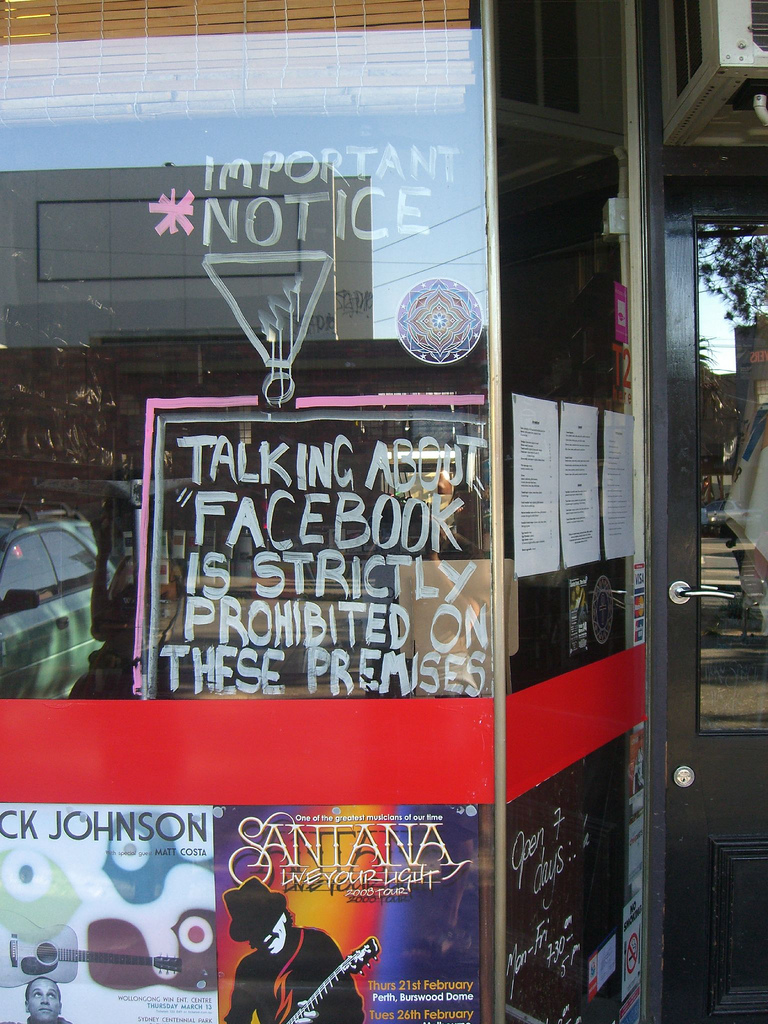
Last year, there was a brilliant preliminary report that came out of MIT where two grad students decided to explore the idea of privacy implications based on omission. In other words, these students said that they could predict, with a high degree of accuracy, the sexual orientation and inclinations of people based on their activities, friends and, notably, omission of certain information on the social networks.

The study was called Project Gaydar and reported a high degree of accuracy in identifying the sexual orientation of people who explicitly did not share that on Facebook.

Using data from the social network Facebook, they made a striking discovery: just by looking at a person’s online friends, they could predict whether the person was gay. They did this with a software program that looked at the gender and sexuality of a person’s friends and, using statistical analysis, made a prediction. The two students had no way of checking all of their predictions, but based on their own knowledge outside the Facebook world, their computer program appeared quite accurate for men, they said. People may be effectively “outing” themselves just by the virtual company they keep.

In an age of renewed concerns about privacy surrounding Twitter, location-based networks such as Foursquare and Facebook’s new Places service, one wonders just how much information that you are not sharing is actually being shown to the world.

For instance, is it logical to deduce that when a persons tone online moves from gregarious to tame, they may be job hunting and wanting to put their best foot forward? Or maybe in the early stages of a new, burgeoning relationship? What can be surmised by a spate of new LinkedIn recommendations? Is a pattern of Twitter status update frequency something that can be reasonably used to deduce some meaning?

Many people are very cautious to curate their online identities in such a way that seems presentable to the outside world. They shape and form their identities for maximum benefit. But what are they not saying that is still being communicated?

My friend, and data monkey, Keith Casey and I are proposing a panel to explore this more at SXSW. We would love your vote to ensure we get selected. It’s a fun topic and one that is front and center in an age with increasing privacy concerns.

I Told You So: Blockbuster Sued over Facebook Beacon

In December, I wrote a post stating that Companies using Facebook Beacon as a marketing tool would get sued and demonstrated the privacy policies in effect at a number of the Beacon partners. One of those is Blockbuster, which as noted in the December post, was so over the top with it’s privacy policy. It’s, in fact, criminal, in my opinion.

Techcrunch is now reporting that Blockbuster is in fact being sued by a Texas woman who under the premise of a 1988 federal law called the Video Privacy Protection Act (18 USC § 2710) which was enacted after Supreme Court nominee Robert Bork was b0rked when video rental history was released during his confirmation hearing. The law prevents video rental companies from disclosing personally identifiable data regarding a member and his/her rental history.

Sidenote: Can someone do a LEXIS/NEXIS search for me and find out if this law has ever been upheld by the SCOTUS?

This is pretty important. Admittedly, I have not done any significant research into how Beacon works with partners since late last year, but at the time, the data was shared by identifiable email addresses. How else do you associate a users partner activity with a Facebook account?

This flew in the face of their privacy policy which stated:

Blockbuster will not provide User or Member e-mail addresses to business partners, unless the User or Member has provided express permission to Blockbuster.

Regardless of whether a Facebook user has opted in or out of Beacon advertising within Facebook, express opt-in is required on the Blockbuster side. And at the time, and pertinent to this lawsuit, even with consent it is criminal for video rental companies to share this kind of data, per 18 USC § 2710.

Stick around Technosailor for more of what you need to know. ;-)

Update: Online Media Daily writes, “But the Beacon platform still allegedly transmits information about people’s activity from Blockbuster to Facebook, unless they have checked a box telling Blockbuster to never send such information.” Enough said.

Ubica a tus Amigos con Livecontacts

FindWhere lanza el beta de Livecontacts.

FindWhere, proveedor de servicios de ubicación y seguimiento via GPS, lanzó hoy la versión beta de su herramienta social de ubicación.

LiveContacts.png

Livecontacts funciona en cualquier red celular GSM y eventualmente funcionará en teléfonos sin GPS. Según la compañía, pronto podrás incluir data de ubicación en tu mensajería de texto, juegos y redes sociales desde tu celular. El sistema de ubicación puede ser activado por el usuario según su preferencia.

La posibilidad de ubicar a tus amigos en tu celular (y que estos te ubiquen a ti) abre interesantes posibilidades (dodgeball ha intentado algo parecido), pero también nos obliga a pensar más a fondo en nuestra privacidad y hasta donde estamos dispuestos a cambiarla por comodidad.

Hasta ahora hemos estado dispuestos a compartir mucho de nuestra vida profesional y cotidiana via redes sociales como Twitter y Facebook con perfectos extraños que sólo conocemos por referencia (a veces de otros extraños). Aplicaciones como Livecontacts nos permitirán compartir nuestra ubicación física con nuestra red social… fomentando encuentros en el mundo físico. Se cierra de esta forma el círculo social, usando la internet para encontrarnos fuera de ella. Espero que esto sea para bien de los usuarios y nadie salga lastimado.

Technorati Tags:
, , , , , , , , ,

Google File System: Much To Do About Nothing

Google had a much-hyped announcement tonight that, frankly, I’m missing the point of. Techcrunch covered it. Scoble Qik’d it live. I was one of numerous who took the bait out of curiosity and watched the announcement live until Scoble turned off his camera, or something.

honestly, folks, I don’t see what the point is. The product manager for this new service began the party by talking about how Google App Engine (Link dead until launch time) would be “easy to use and easy to scale”. The presentation then showed a very nervous developer trying to write up a simple Hello World script in Python.

Ok, here’s my problem. For the growing number of non-technical entrepreneurs, python is neither easy to use and the demonstration does not demonstrate easy to scale. At some point, the presenter stated that anyone could build applications using Google’s infrastructure that could be as big as Google’s own apps.

Forgive my cynicism.

This, my friends, is an Amazon S3 “me too”. There is not innovation here. There is nothing ground breaking here. It is yet another case of Google deciding that it can do things better than everyone else but with the exception of Search, Gmail and Google Adsense (the latter being questionable these days), I wonder how many of Google’s initiatives are really all that groundbreaking.

Then there’s the question of privacy. Google’s ever present incursion into deeper parts of lives should make every privacy nut cringe, and turn those who are not privacy nuts into privacy nuts. With the adoption of OpenSocial and now providing a platform for application development, Google’s hand continue to delve deeper into our deeply guarded private lives.

I’m skeptical here folks. From what I’ve seen, nothing is easy to get into here. Companies are not necessarily better off for using this infrastructure. The concept of threaded processes and optimized platforms for optimized content goes out the window with an S3 or a Google App Engine. And… The privacy concerns are very real.

Hold the phone. Let’s see what happens here.

Ask Takes Your Privacy Seriously

There was an old story I was told as a kid about boiling a frog to death. As the story goes, you can’t boil a frog to death by dropping him in a pot of boiling water. But put him in cool water and bring the water to a boil, and he won’t know the difference. Eventually, the water will get so hot that the frog will die happily in the water.

In today’s age of the internet and privacy concerns, the proverbial frog is us and we are getting more forgiving and giving regarding our personal lives. We are voyeurs online, sharing photos on Flickr, making friends on MySpace, buying stuff online and finding it “cool” to see those purchases show up in Facebook.

Perhaps the most dangerous of all precedents is what our friends at the search giants are doing. Desktop Search clients documenting everything on your computer – to make finding data easier. All our mail and other data in one place – but easily given to the government without subpoena. Personalized search based on personal trends – but those trends must be extrapolated from stored data regarding your behavior.

Fortunately, there is one search engine who recognizes the dangerous precedents set my the search giants and have taken steps to remedy the problem. At least on their end. It’s unclear if this move will serve to push more users to Ask.com, but it can’t hurt.

Users have the ability to turn AskEraser on at the cost of personalizing Ask.com. Hey, does Ask really need the data they use to personalize it for you anyway?

So in a world where our privacy is going farther away, Ask is taking a sane approach and making sure that we have the choice in the matter.

La Privacidad como Moneda

Alex Rudloff escribe un interesante artículo (en inglés) sobre el uso de nuestra privacidad como moneda, pudiendo cada quien intercambiar partes de su privacidad por servicios.

De esta forma podemos indicarle a Facebook nuestra fecha de cumpleaños a cambio de que nuestros amigos estén al tanto y puedan felicitarnos. A mint podemos contarle nuestros hábitos de consumo personales a cambio de información y recomendaciones para ahorrar. A LinkedIn le informamos en dónde trabajamos y así podemos conectarnos con nuestros colegas. A Google le permitimos almacenar nuestros correos, a cambio de la comodidad de tener acceso a ellos desde cualquier conexión. A Amazon le dejamos estudiar nuestros gustos a cambio de mejores recomendaciones. Y así sucesivamente.

Lo interesante de este modelo, es que es dinero renovable. A cambio de la misma información podemos obtener múltiples servicios, siempre y cuando uno de los proveedores de servicio no comparta nuestra información.

Cuando un proveedor de servicios decide compartir nuestra información sin nuestra autorización, esta pierde valor. ¿Si todos los websites conocen nuestra fecha de nacimiento, por qué darnos algo a cambio de ella?

En el caso particular de Facebook, ya han violado la privacidad de sus usuarios en dos ocasiones. Pero al parecer, el servicio que ofrece Facebook, o mejor dicho, el valor que obtienen sus usuarios es lo suficientemente alto para que la mayoría permita estos abusos. Eso, o simplemente no se dan cuenta de lo que está ocurriendo.

Cuando activaron el Mini-Feed, Facebook compartió información de las actividades de sus usuarios con el resto de sus amigos en Facebook. Y ahora con el caso del Beacon, Facebook y sus socios comerciales compartieron información entre ellos sobre las actividades de los miembros de Facebook en otros websites.

En ambas ocasiones Facebook ha recapacitado, explicado y ofrecido una solución. Pero también en ambas ocasiones Facebook ha preferido comenzar con la versión más abusiva de la privacidad de sus usuarios, rectificando solamente después de una reacción de estos.

Es sólo cuestión de tiempo para que los datos de más de 50 millones de usuarios estén comprometidos. Y entonces nuestra privacidad se habrá devaluado.